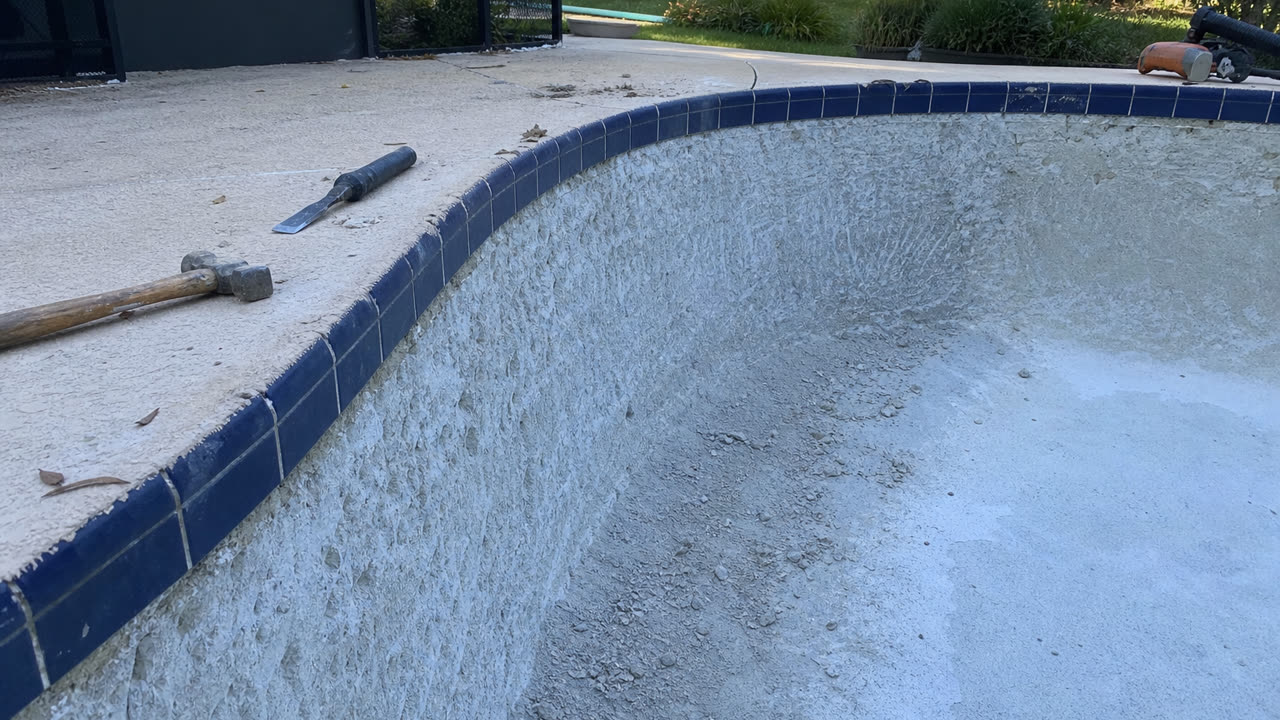
Resurfacing is about prep, not just a new finish
Good pool resurfacing starts before the new material goes on. The old surface has to be evaluated for loose plaster, hollow spots, cracks, staining, and areas that may need repair before the finish can hold properly. If that step is rushed, the pool can look improved at first and still have problems later.
In Orlando, many resurfacing conversations start after years of sun exposure, warm water, and aggressive chemistry corrections. Homeowners often notice a sandy feel on the steps, gray mottling on the floor, or patches that look dirty even after brushing. Those symptoms help narrow the conversation. They do not automatically tell you which finish to choose or what the final scope should be.
A resurfacing professional may discuss marcite, quartz, pebble, exposed aggregate, tile repair, coping edges, main drain updates, and startup chemistry. The right path depends on the pool, the existing finish, access, and how long you plan to keep the home.
When resurfacing makes sense
Resurfacing usually makes sense when the finish is broadly worn rather than damaged in one small spot. If roughness is spread across the floor and walls, if multiple areas are pitted, or if discoloration is locked into the finish, patching may only buy time. A full surface conversation can be more honest than repeating small repairs that do not solve the underlying wear.
That said, not every ugly pool needs immediate resurfacing. Some stains can be treated. Some chips can be repaired. Some tile or coping concerns are separate from the interior finish. A careful first review protects you from paying for the wrong solution.