Full resurfacing · Orlando metro
Pool resurfacing in Orlando — the whole job, in order
A complete new interior finish for pools whose surface has reached the end: rough plaster, spreading mottle, thin spots showing gunite, stains that win every acid-wash argument. Drain, prep, repair, finish, fill, and start-up across the Orlando metro — with the groundwater management Central Florida shells demand and a finish choice made on wet samples, not catalog pages.
The sequence
Six steps, each with a wrong shortcut
Central Florida's water table can float an empty pool out of the ground. Hydrostatic relief and drain timing aren't paranoia — they're the difference between a resurface and a structural disaster.
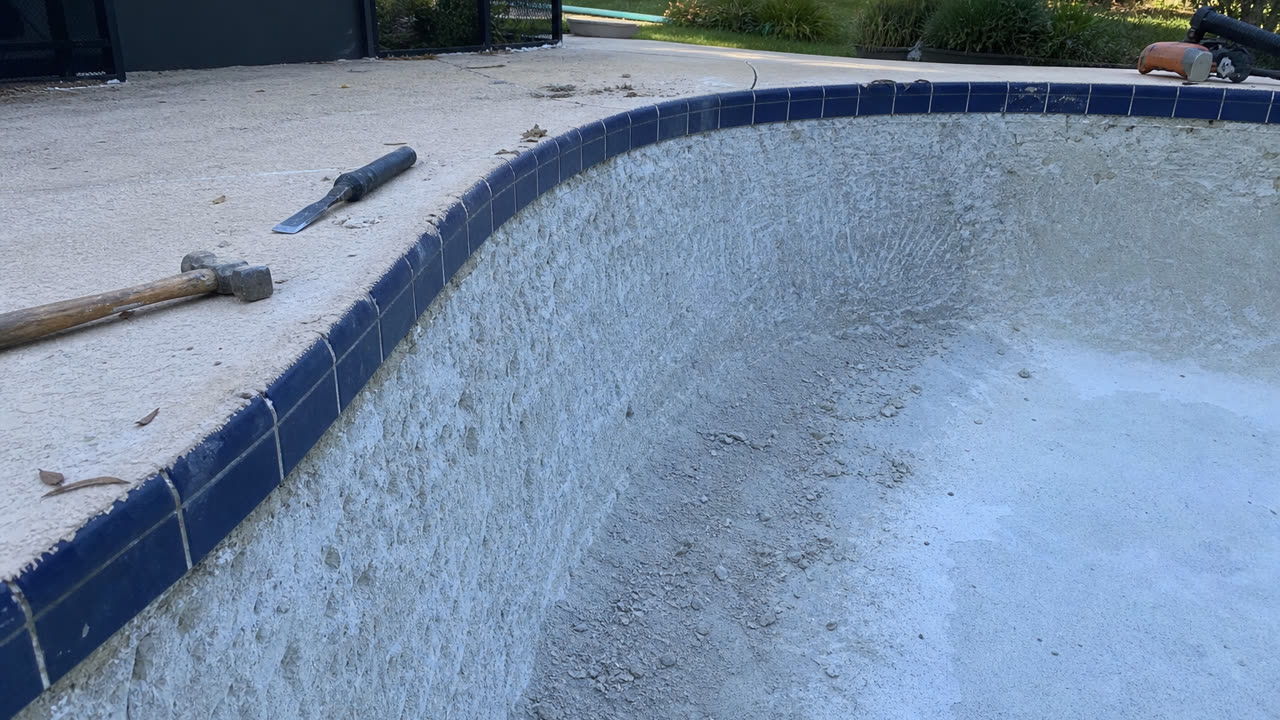
The step that decides the finish's lifespan. Old finish comes off or gets properly bonded; hollow spots and delamination found now cost little — found later, they cost a redo.
Cracks evaluated honestly (surface versus structural), fittings reset, hollow spots cut out and patched — the empty pool is the only time this work is cheap.
Waterline tile and coping work belongs in the same project — doing it separately later means paying for access twice. See the tile and coping page.
Marcite, quartz, or pebble, applied in a workable weather window. Summer afternoons in Orlando get a vote; rushing finish work into a storm window is how mottling happens.
The fill runs continuously to avoid rings, then start-up chemistry protects the curing finish for its first weeks underwater. Most 'bad plaster jobs' are actually bad start-ups.
Honest scoping
Why the quote happens at the pool
Square footage is measurable from your description — everything else isn't. What the old finish is, how it's failing, whether prep needs a chip-out, what the steps and benches hide, the condition of tile and coping, and which finish suits the pool's use and budget: those are eyes-and-tape-measure questions. The visit produces a real scope with the finish options priced side by side, wet samples included.
What the phone call does well: hear what the surface is doing, flag whether plaster repair might be the cheaper answer, and set the visit. Repair instead of resurface is a real outcome here when the surface has years left.
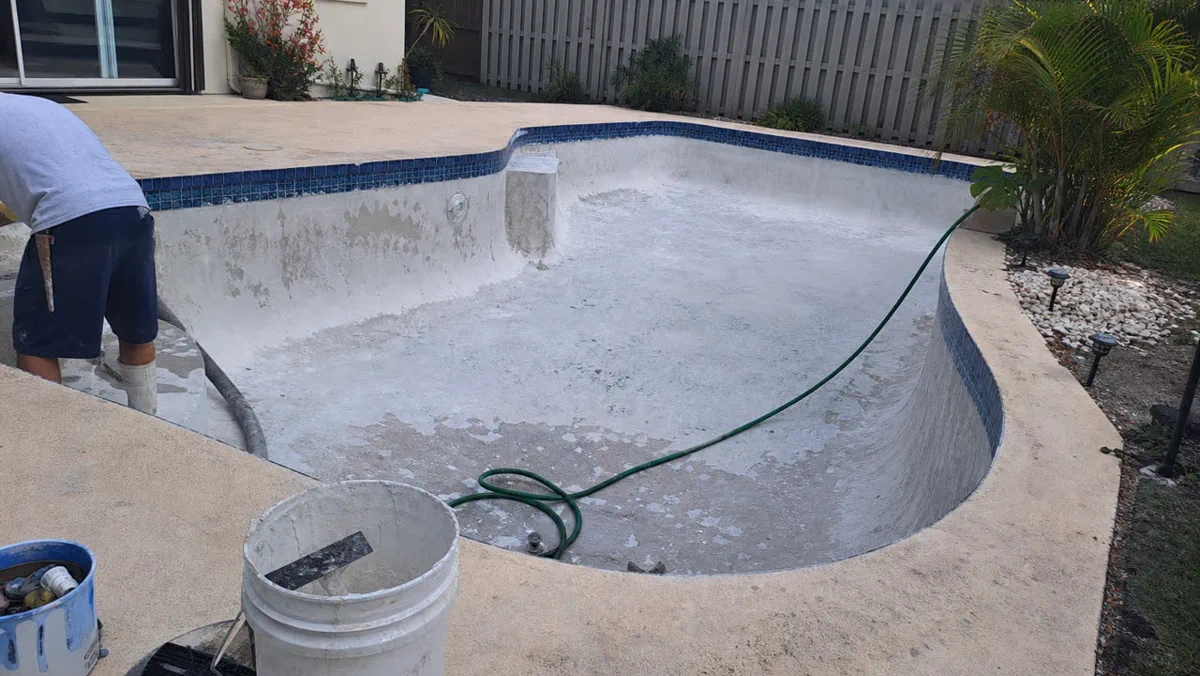
Before and after, honestly
What the change actually looks like
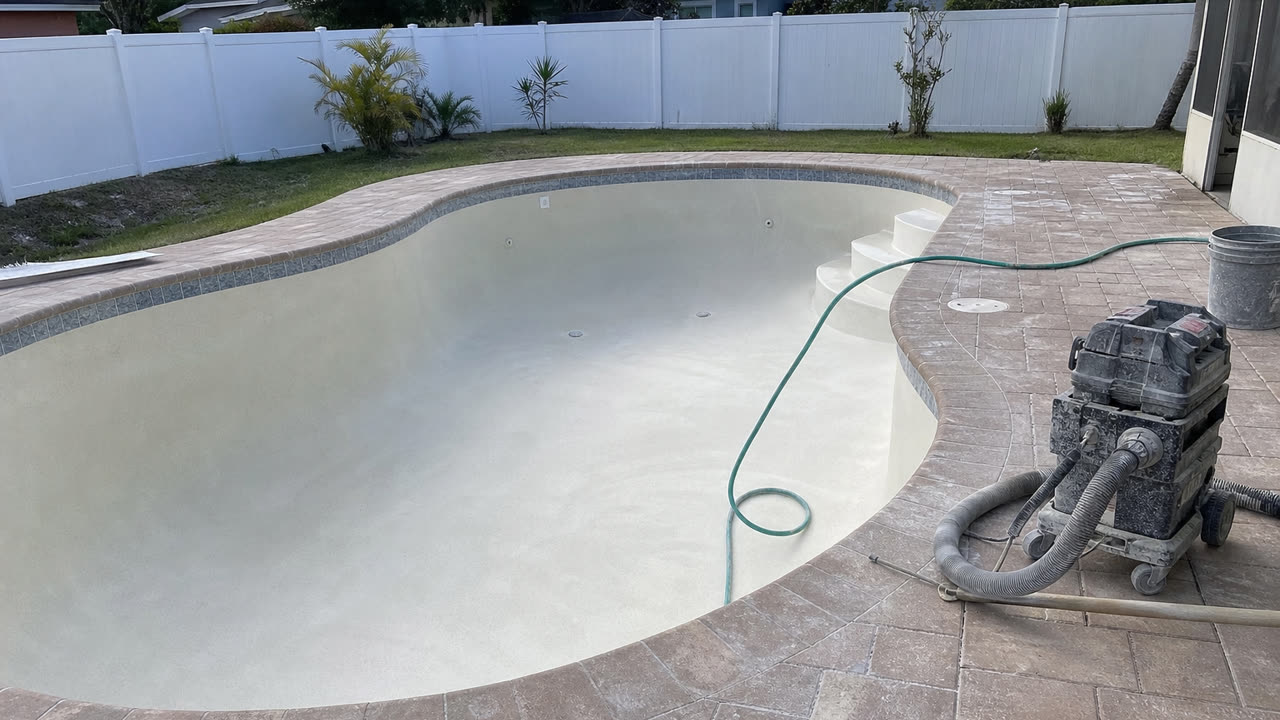
Educational examples of the two ends of the journey — a surface at the end of its life, and a fresh finish filled and balanced. Every pool's result depends on its finish choice and its light; the wet samples at the quote visit are the honest preview of yours.
Resurfacing questions
What's the difference between a chip-out and a bond-coat prep?
A chip-out removes the old finish down to the shell — the most thorough prep and the right call when the old surface is delaminating or this is the second-plus layer. A bond coat roughens and primes a sound existing surface so new finish can grip it — faster and cheaper when conditions allow. Which one your pool needs is a judgment made at the pool, and it's a meaningful part of the price difference between quotes.
Can resurfacing fix the cracks in my pool?
Surface cracks, crazing, and check-cracking — yes, that's what resurfacing addresses. Structural cracks that go through the shell are a different conversation: they get evaluated and repaired before any finish goes on, because new plaster over a moving crack just cracks again. You'll get a straight read on which kind you have.
How soon can we swim after?
Once the pool is full and the start-up chemistry has the water balanced — typically within days of the fill, with brushing and chemistry duties for the first weeks while the finish cures underwater. The start-up period genuinely matters: it's where new finishes are protected or scarred, and the handoff includes exactly what to do.
Request pool resurfacing help
Describe the surface — rough, mottled, flaking, stained — plus the pool's rough age if you know it and your city. The call helps set up the on-site scope review with wet samples.
Surface at the end of its run?
Drain to start-up, done in order, with the groundwater respected — call or request pool help.
Before scheduling finish work, separate normal surface wear from water-loss problems. If the pool is dropping faster than expected, it is usually smarter to have the pool checked for leaks first so the new finish is not covering an active plumbing, skimmer, shell, or light-niche issue.